Should we authenticate content?
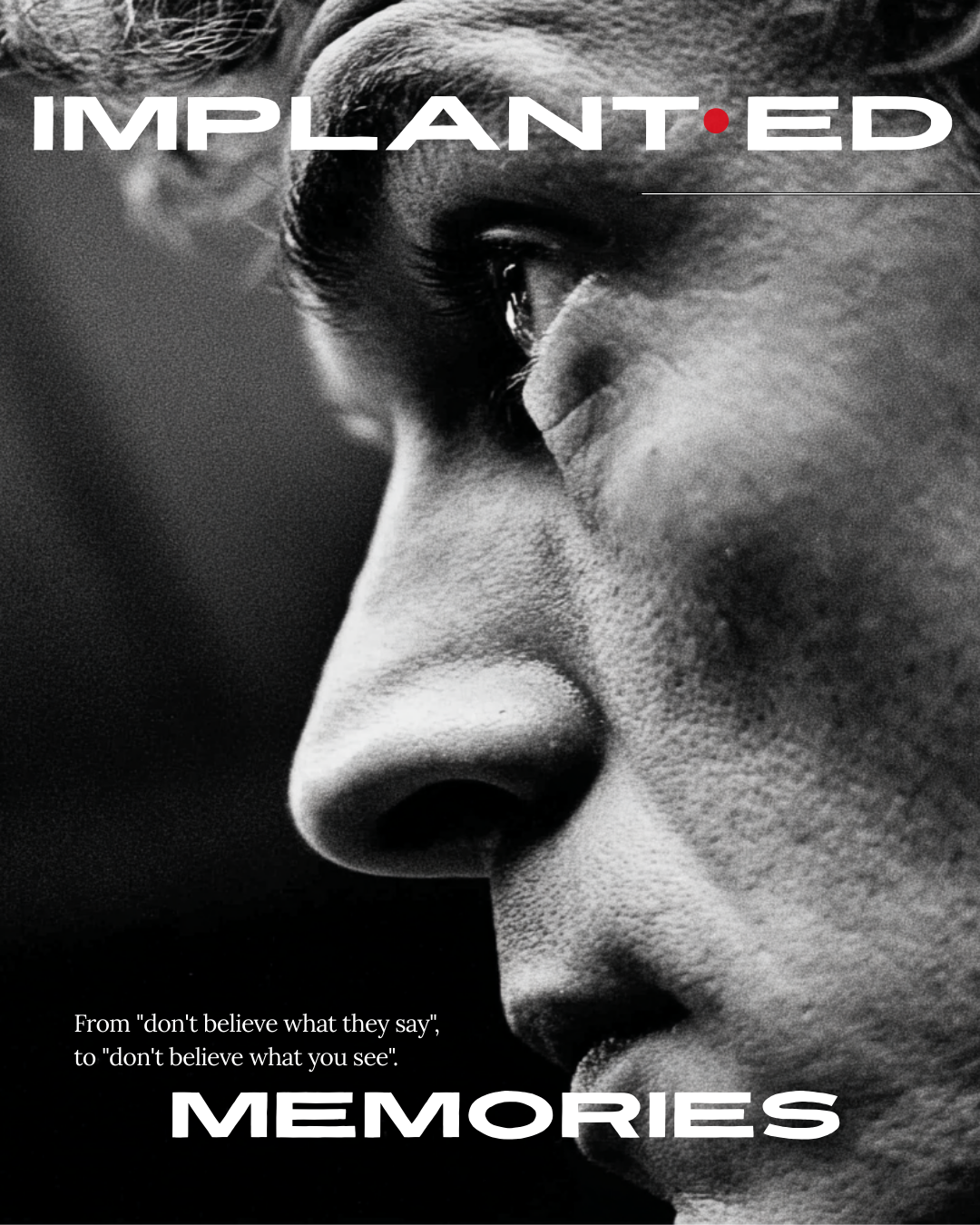
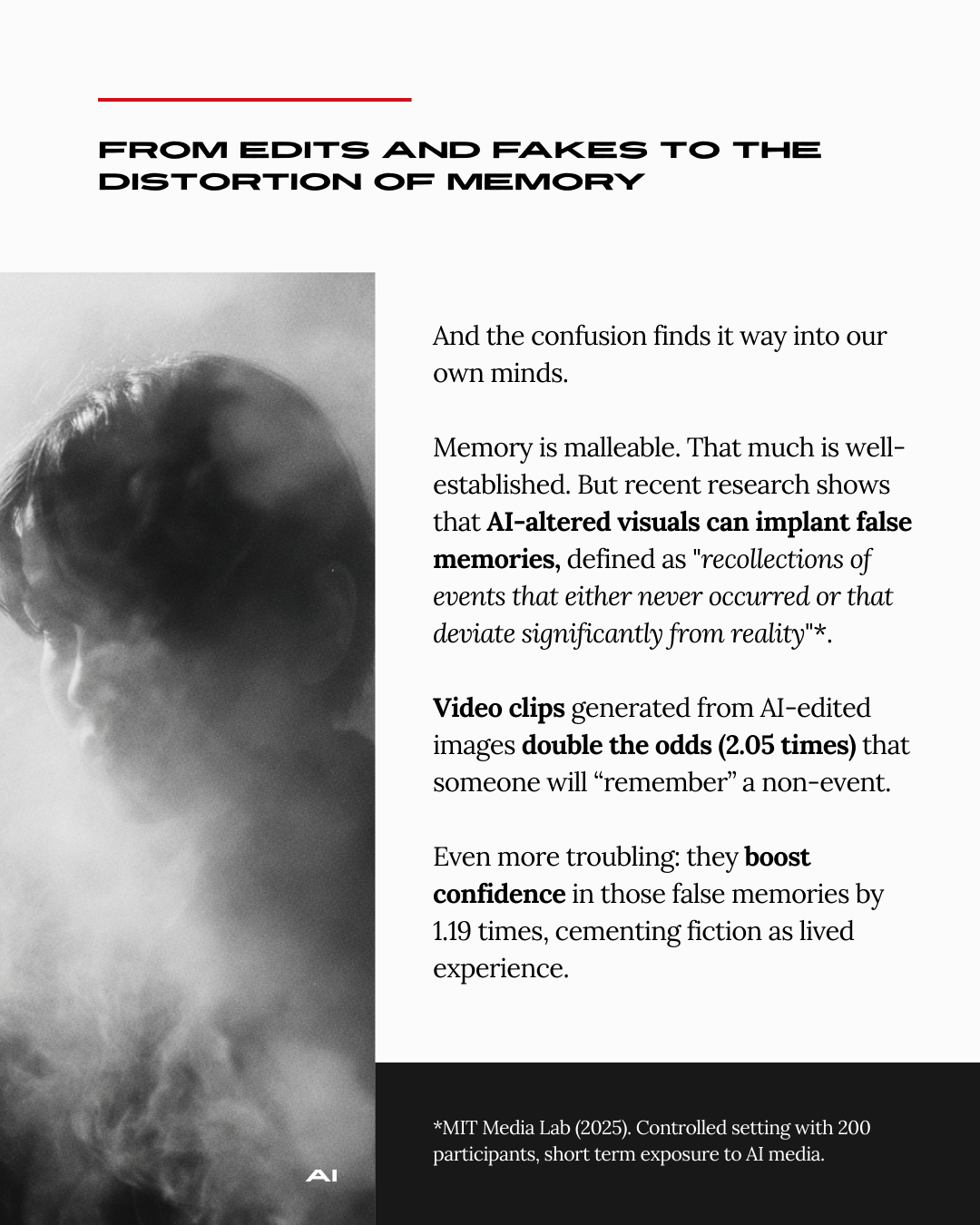
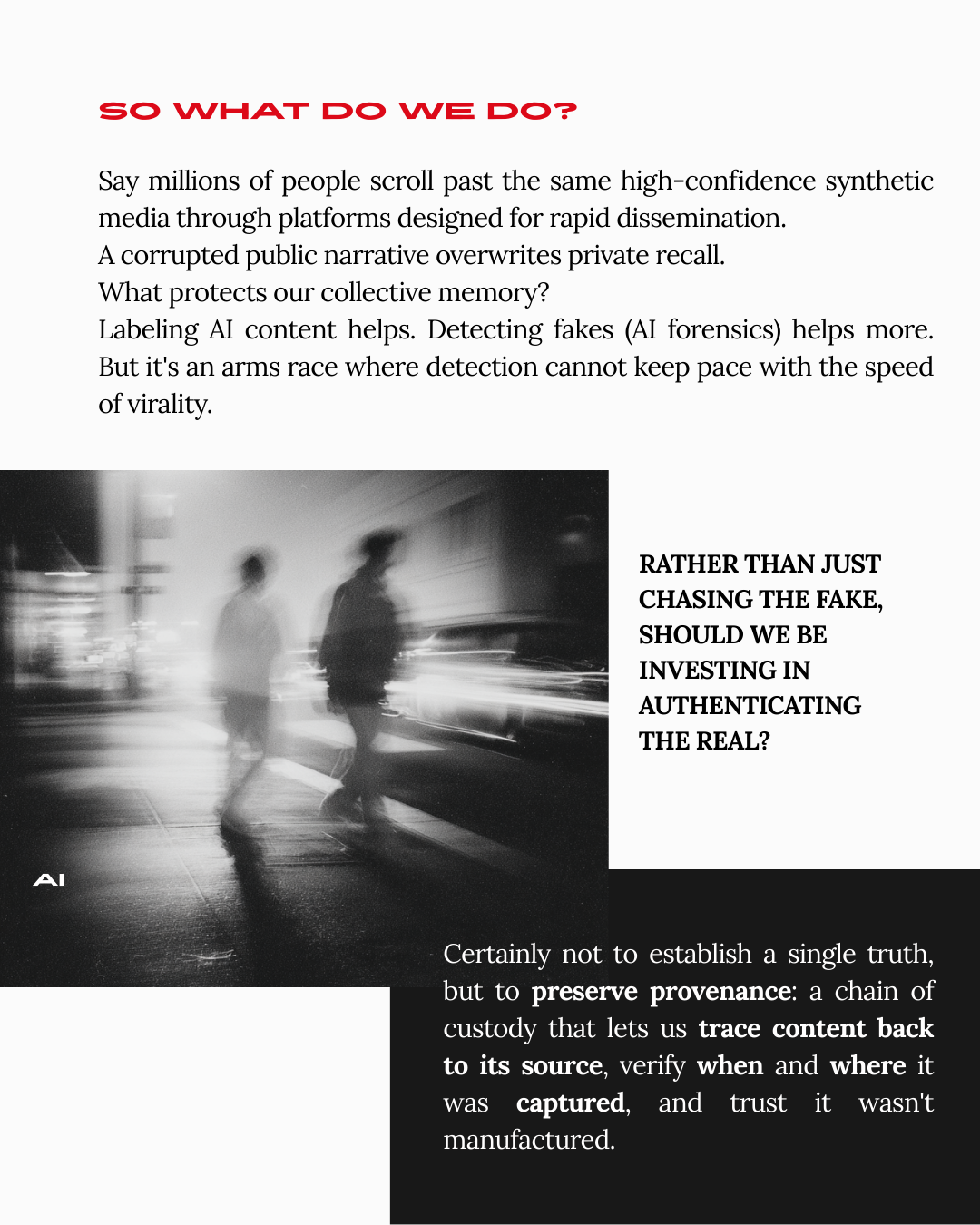
Qualia’s featured visual essay attempts to map a problem far bigger than any slide can hold: how AI-generated images collide with memory, trust, and visual evidence.
It grew out of a Leica-organized discussion I attended on the role of the photographer in the face of risks posed by AI-generated fake images, with photographers Álvaro Ybarra and Rodrigo Rivas (Madrid, 18–19 September 2025).
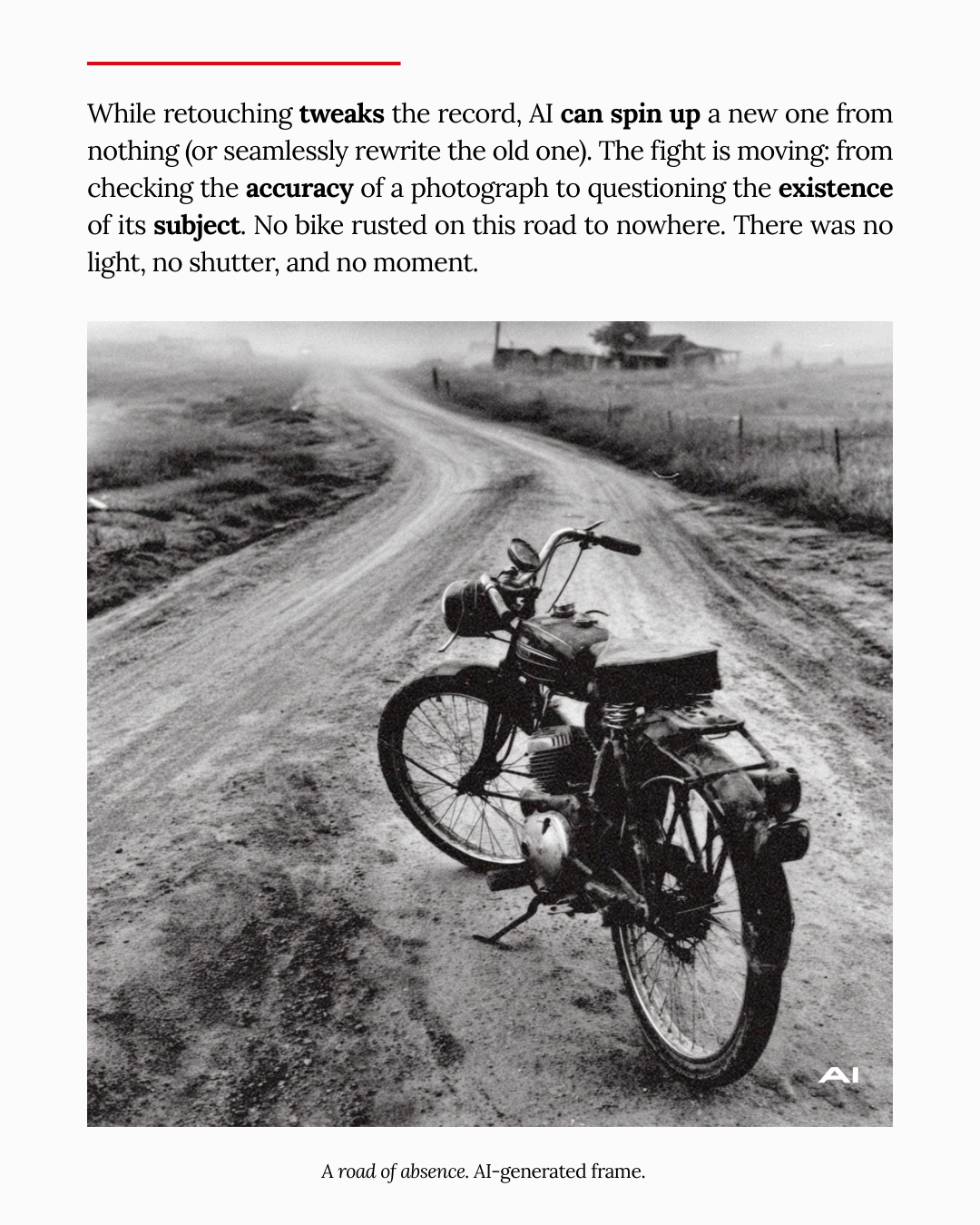
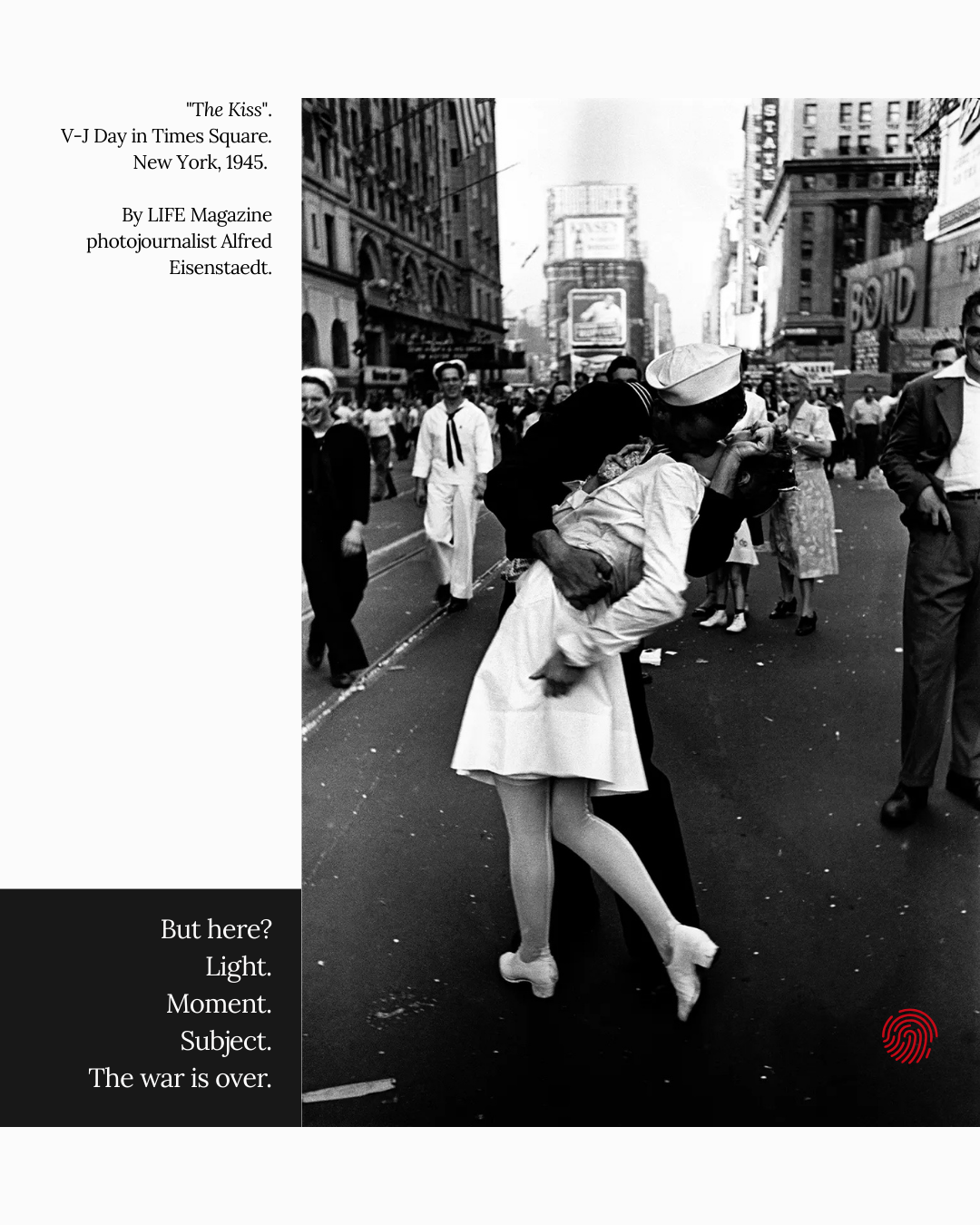
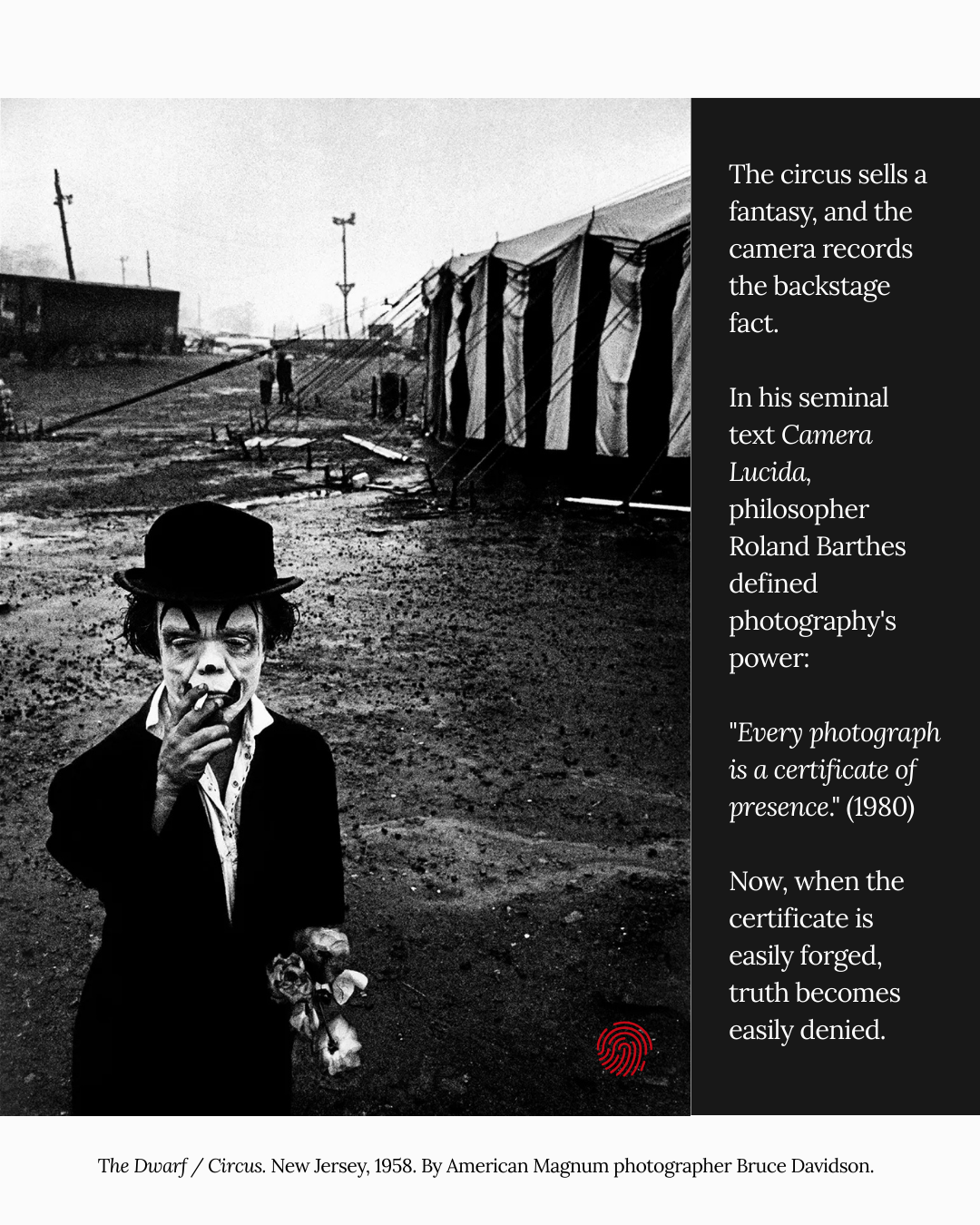
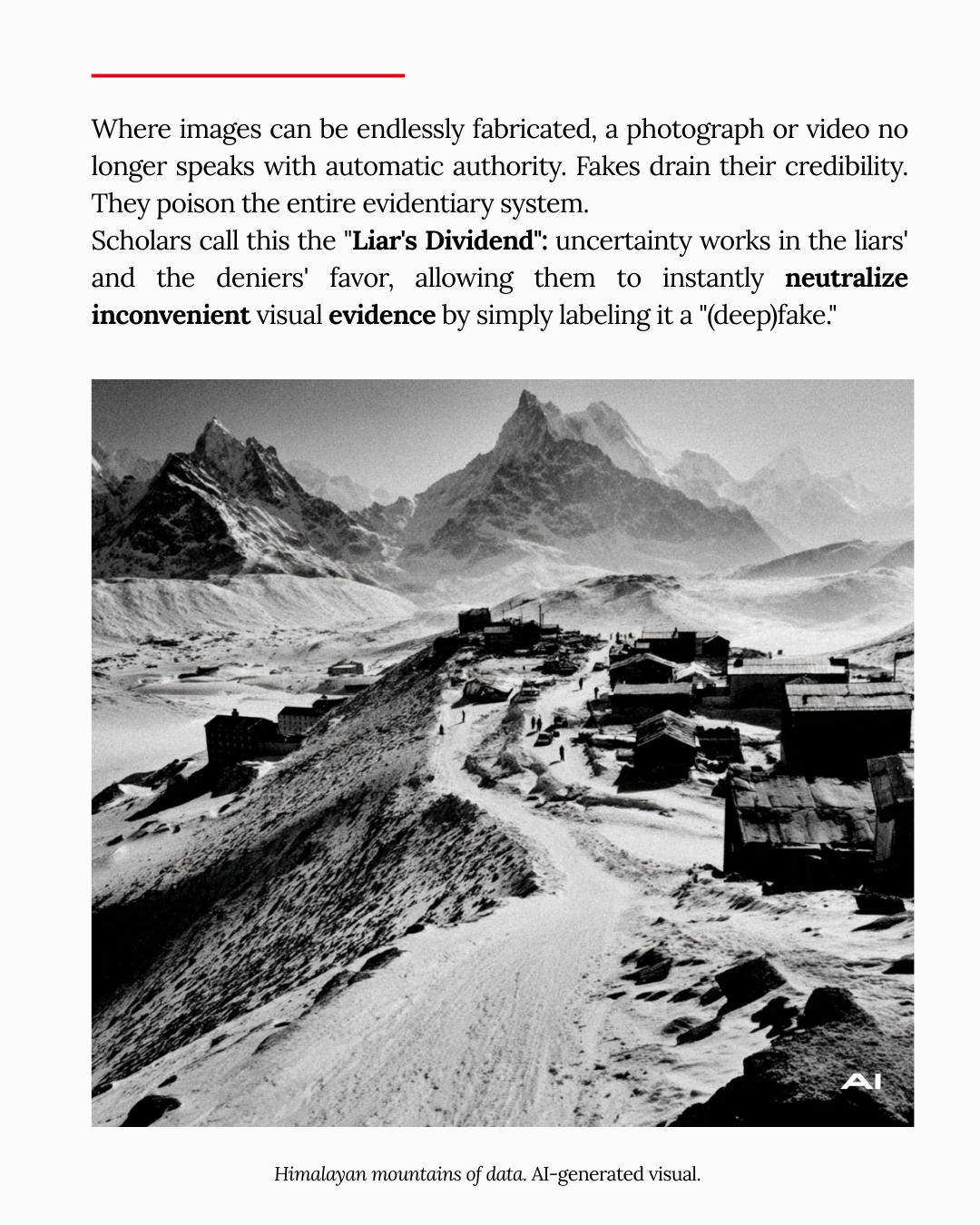
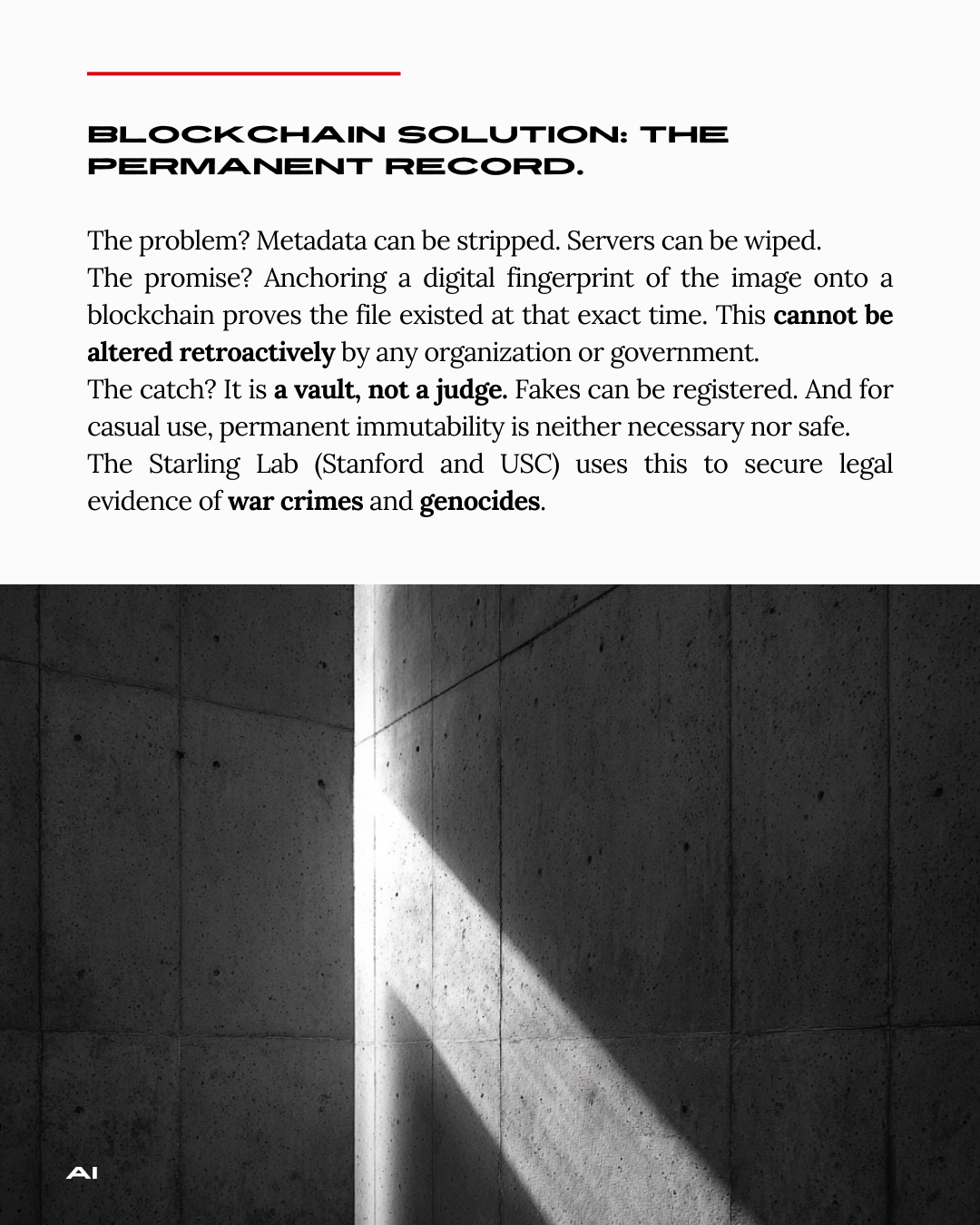
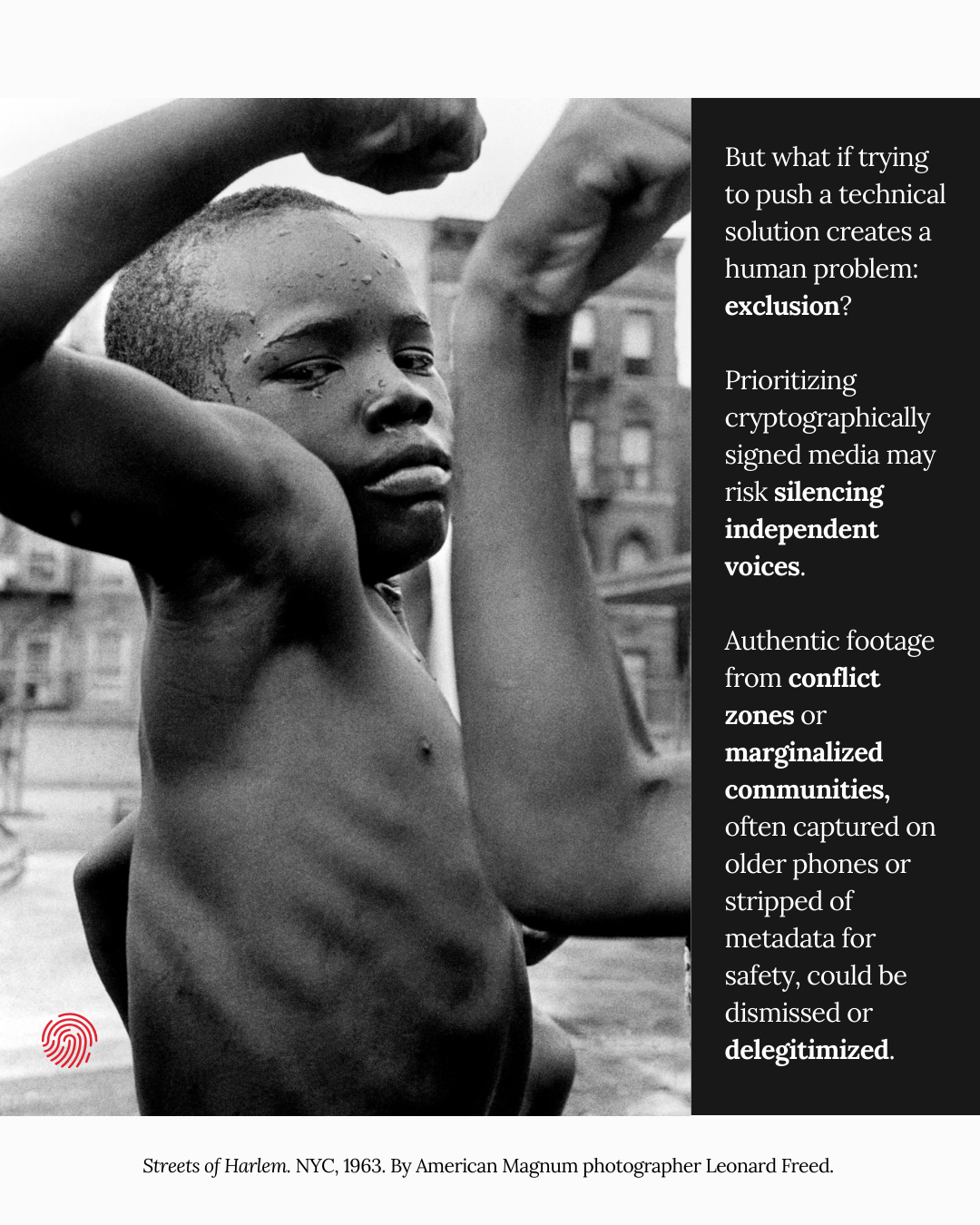
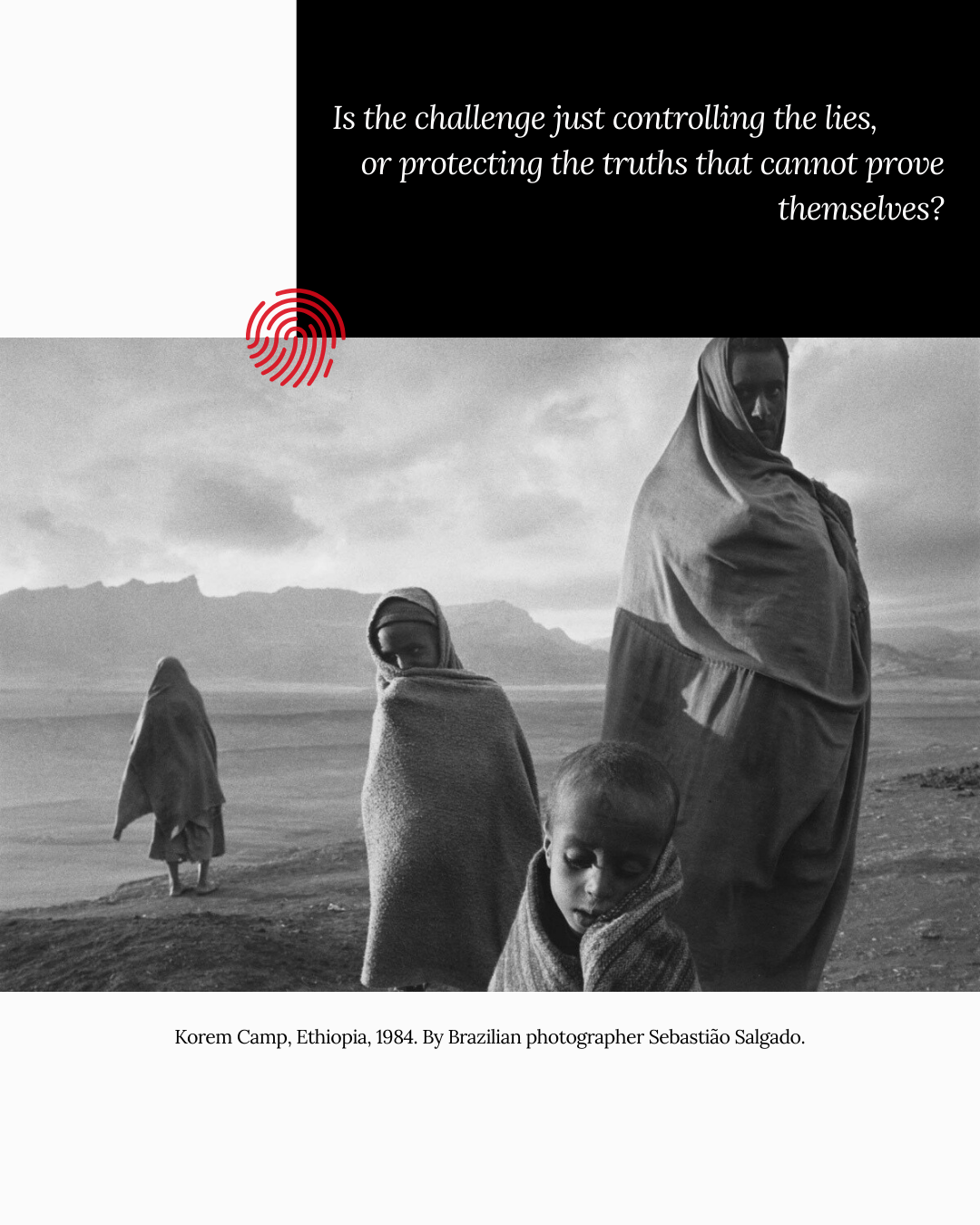
From "don't believe what they say" to "don't believe what you see".
All AI-generated visuals with Midjourney are marked as such.
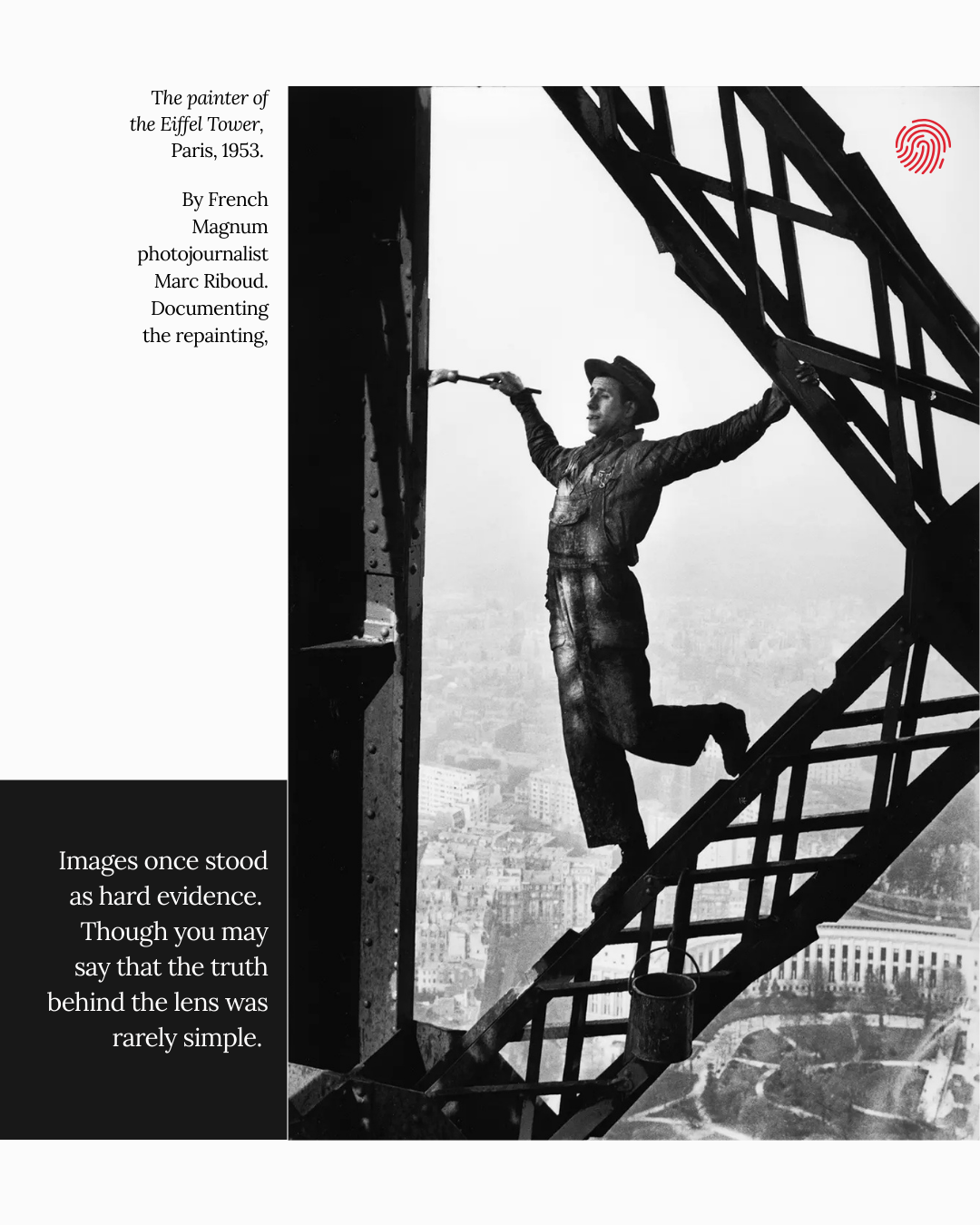
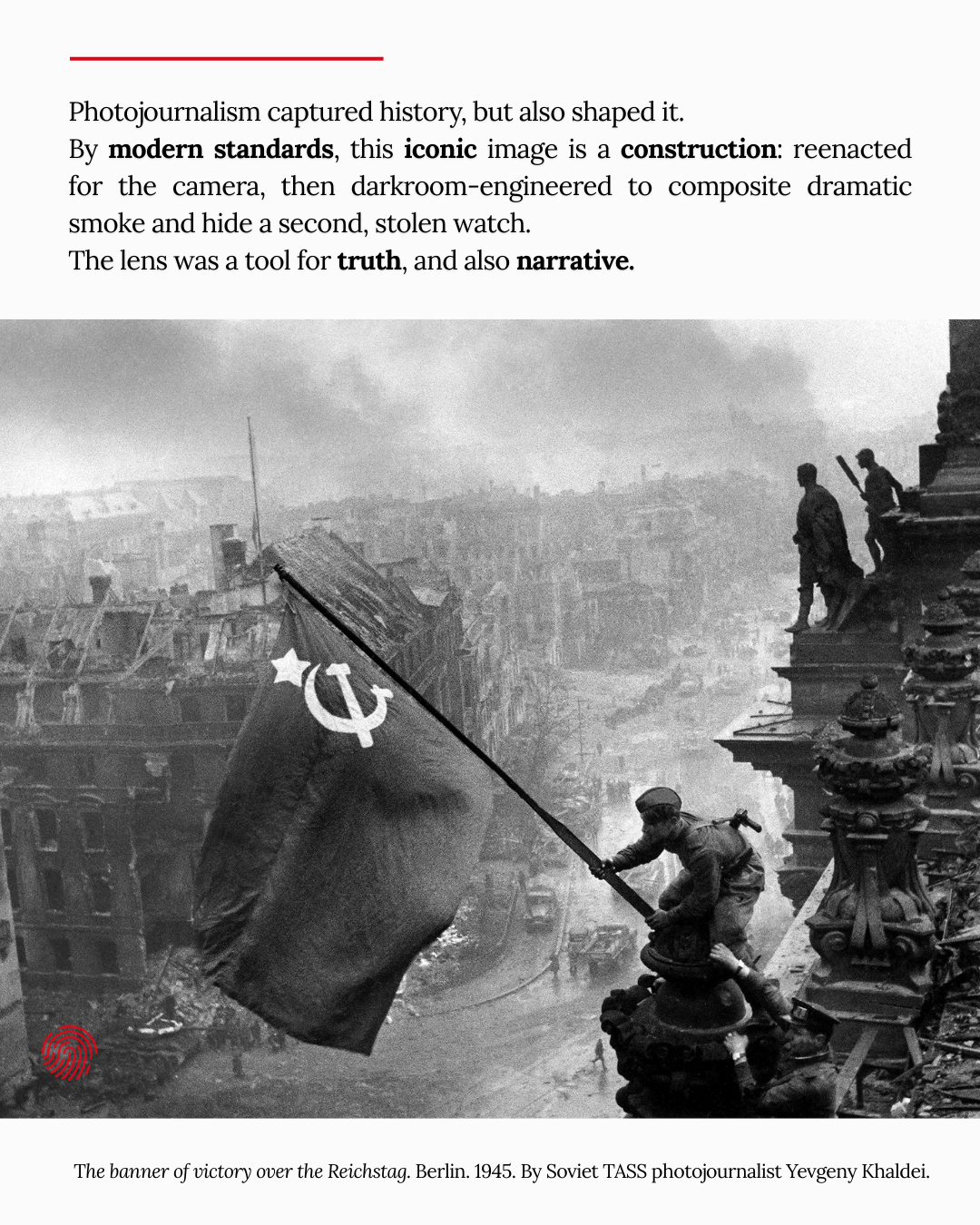
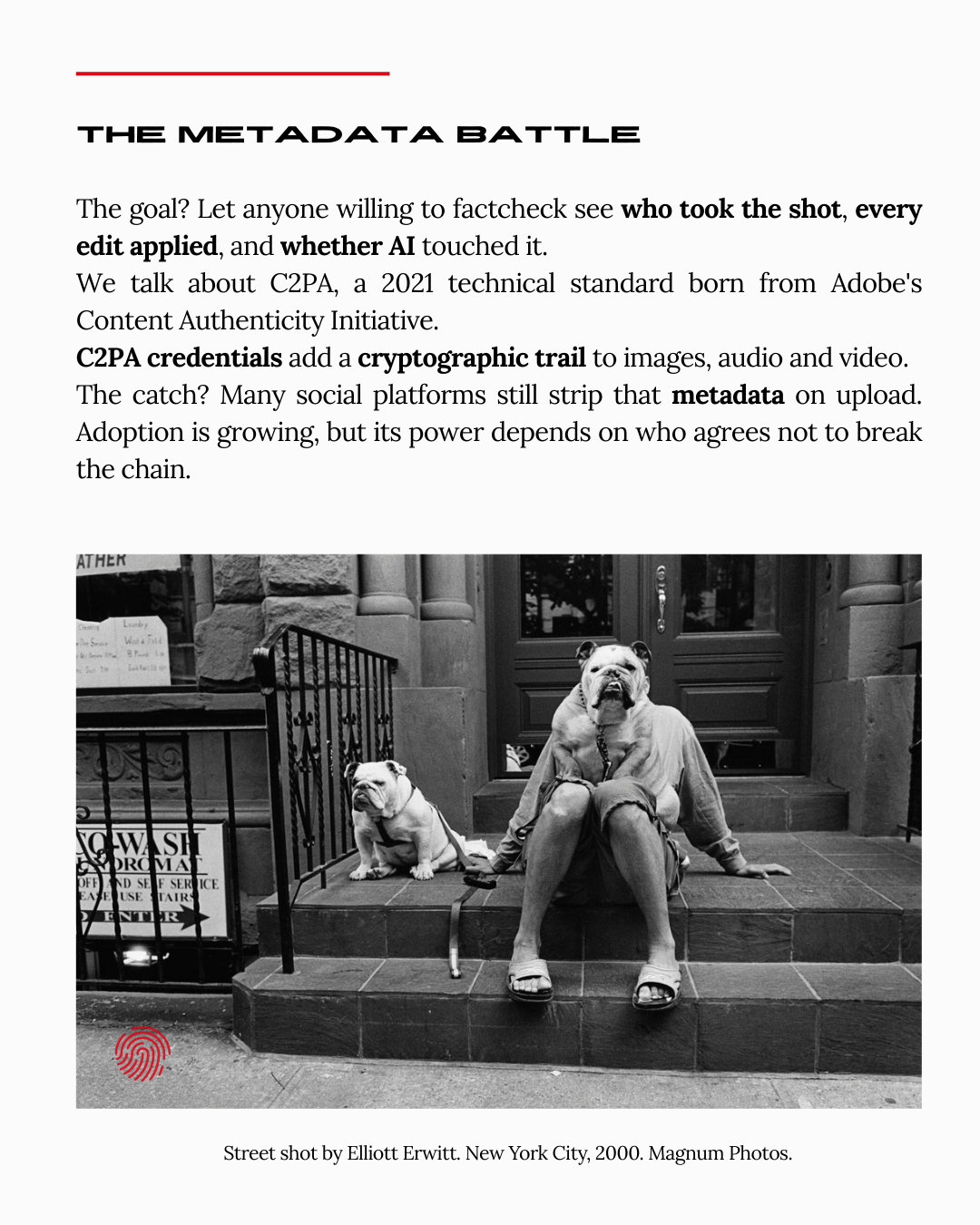
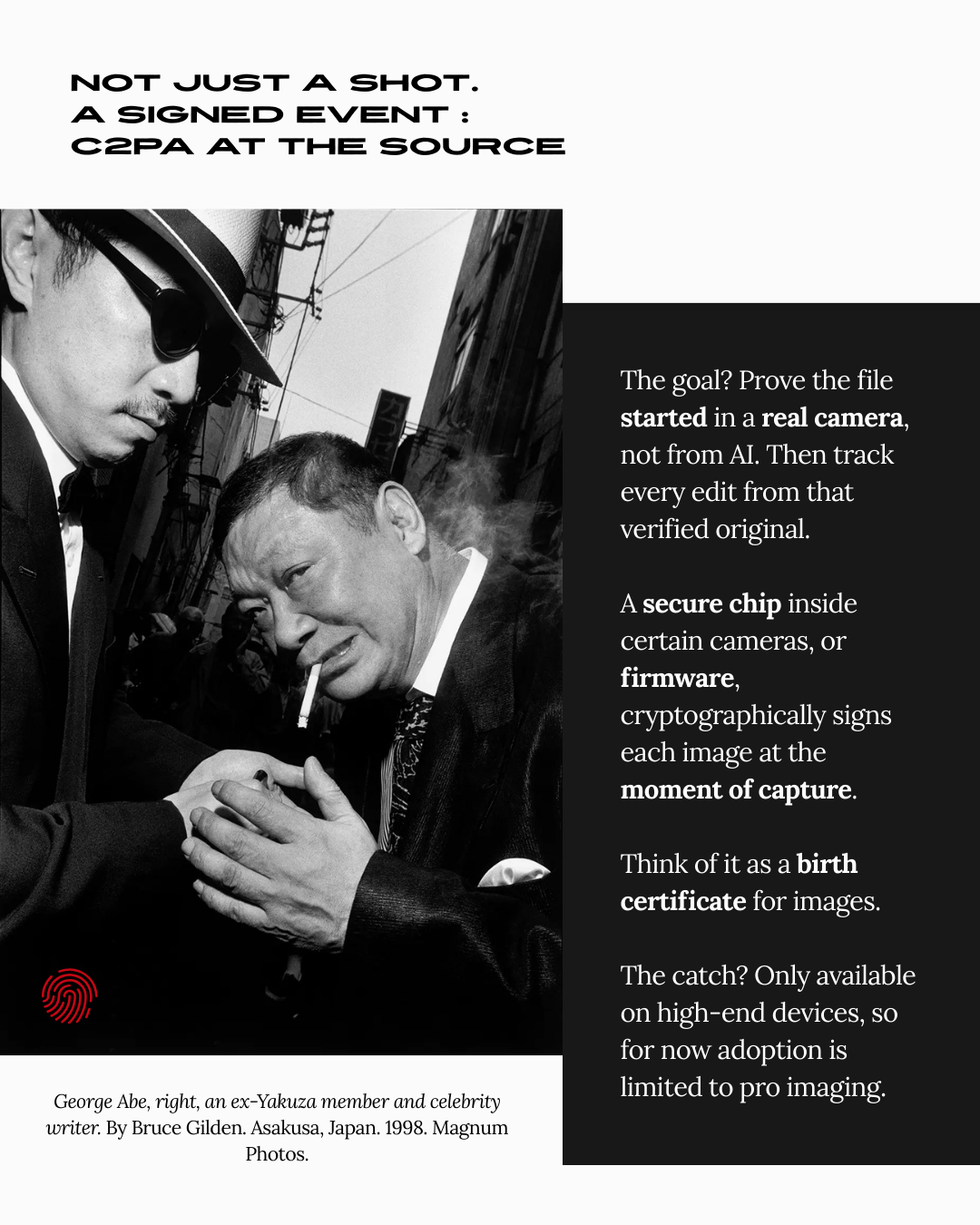
All classic photographs, some from the Leica exhibition in Madrid and others drawn from its iconic visual history, are fully captioned, attributed, and used here for commentary purposes. Please check the RED FINGERPRINT.
Research cited:
Pataranutaporn, P., Archiwaranguprok, C., Chan, S. W. T., Loftus, E., & Maes, P. (2025). Synthetic Human Memories: AI-Edited Images and Videos Can Implant False Memories and Distort Recollection. CHI ’25, Yokohama, Japan. https://doi.org/10.1145/3706598.3713697
For related research on induced false memories, including other modalities such as chatbot conversations, see AI-Implanted False Memories (Project overview), MIT Media Lab: https://www.media.mit.edu/projects/ai-false-memories/overview/
👉 You may also find the work of the Starling Lab for Data Integrity worth exploring.
The original discussion that sparked this reflection was “El papel del fotógrafo ante el riesgo de la imagen falsa de la IA” (18.09.2025) with photographers Álvaro Ybarra and Rodrigo Rivas.
#aigeneratedimages #C2PA #contentauthenticity
